
It’s no secret that construction is physically demanding work. Long hours, exposure to the elements, and heavy manual labour take a toll on even the most resilient workforce. That said, when fatigue sets in, it becomes more than just an issue of comfort; it becomes a critical safety risk.
Ensuring construction site safety goes beyond helmets and high-vis jackets. For contractors, site managers, and planners, it requires looking at the environment in which your team operates. More specifically, it’s about the quality of welfare facilities provided. From a warm place to dry wet clothes to a clean area for meals, these amenities are the backbone of a productive and safe site.
This guide explores how proper welfare units reduce fatigue, boost morale, and ensure you meet legal compliance. We’ll also highlight the practical solutions available to keep your site running smoothly.
The Link Between Welfare and Safety
Fatigue is a silent hazard in the construction industry. A tired worker has slower reaction times, reduced concentration, and poor decision-making skills. This is a dangerous combination on a site involving heavy machinery and hazardous materials.
Providing high-quality welfare facilities acts as a direct countermeasure to this risk. When workers have access to a warm, dry, and comfortable space to rest during breaks, they can properly recharge. This recovery time is essential for maintaining focus and physical capability throughout a shift.
Moreover, morale plays a significant role in safety culture. A workforce that feels valued and cared for is more likely to adhere to safety protocols and look out for one another. Meanwhile, inadequate facilities can lead to frustration, lower job satisfaction, and disengagement. Each of these negatively impacts safety standards.
Legal Requirements
Providing adequate welfare facilities isn’t just a “nice-to-have”. Instead, it’s a legal requirement. This is according to the Health and Safety at Work Act and the Construction (Design and Management) Regulations 2015 (CDM 2015).
As a contractor or site manager, you must ensure that workers have access to:
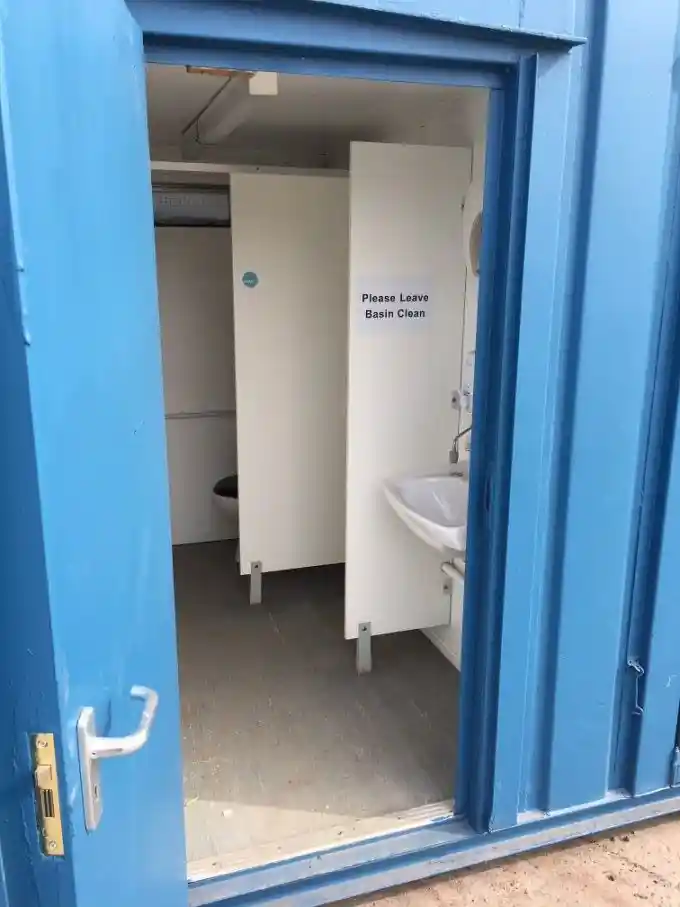
- Sanitary conveniences: Clean, lit, and ventilated toilets.
- Washing facilities: Basins large enough to wash hands, forearms, and face. Hot and cold (or warm) running water, soap, and drying facilities.
- Drinking water: A supply of wholesome drinking water.
- Changing rooms and lockers: If workers need to change into special clothing, there must be a secure place to store personal items.
- Rest facilities: Areas equipped with tables and seating (with backs) where workers can eat and drink. This includes facilities to boil water and heat food.
Failure to provide these basics can result in hefty fines and project shutdowns. However, meeting these standards is also a strategic move to ensure construction site safety and efficiency.
Assessing Your Site Needs
Every construction project is unique, and so are its welfare requirements. To determine the best setup for your site, you need to consider several key factors.
1. Site Size and Duration
The scale of your project dictates the type of facilities you need. A small, short-term renovation might only require a mobile welfare unit that can be towed into place. In contrast, a large infrastructure project spanning months or years will likely need static units. These have more robust capabilities.
2. Number of Workers
You must provide enough facilities to prevent overcrowding. This also helps to ensure everyone has access during breaks.
- Toilets: The HSE recommends specific ratios (e.g., one toilet per seven people where both men and women are working. One per 25 men for urinal/WC combinations).
- Seating: There should be enough seating for everyone to sit comfortably during meal breaks.
3. Location and Services
Is your site connected to mains electricity, water, and sewage?
- Connected Sites: You can opt for standard accommodation units that plumb directly into the mains.
- Remote Sites: If you are off-grid, you will need self-contained welfare units. These have onboard generators, water tanks, and waste storage.
Mobile vs. Static Welfare Units
Choosing between mobile and static units depends largely on the flexibility and duration of your project.
Mobile Welfare Units
These are ideal for transient sites or projects that move linearly, such as roadworks or utility installations.
- Pros: Easy to tow, set up in minutes, and fully self-contained.
- Features: Typically include a canteen, chemical toilet, drying room, and generator.
- Addplant’s solution: Our mobile units (12ft or 16ft) are perfect for getting construction site safety compliant. They feature anti-vandal construction and can be easily relocated as the work progresses.
Static Welfare Units
Best suited for longer-term projects with a fixed compound area.
- Pros: Larger interior space, more robust facilities, and greater capacity for water and waste.
- Features: Separate offices, larger canteens, and dedicated drying rooms.
- Addplant’s solution: Our static units (20ft and 24ft) offer extensive amenities. These include 50-gallon water supplies (or larger) and onboard generators. This makes them perfect for sites without mains connections.
Reducing Fatigue with Proper Drying Rooms
One often overlooked aspect of welfare is the drying room. In the UK, wet weather is a guarantee. Working in damp, cold PPE is not only miserable but also a health risk. It can lead to issues like hypothermia or trench foot, and contribute to fatigue.
A dedicated drying room allows workers to dry their wet gear effectively during breaks or overnight. This ensures that when they step back onto the site, they are warm, dry, and ready to focus. Addplant’s mobile and static units come equipped with separate drying areas. This ensures personal clothing remains separate from work gear. The separation further enhances hygiene and comfort.
The Role of Hygiene in Morale
Hygiene is a major factor in worker morale. Hot running water, proper flushing toilets, and clean eating areas tell your workforce that their well-being is a priority.
On sites without mains connection, maintaining these standards can be challenging. However, modern welfare units bridge this gap.
- Freshwater Flush: Many of our units feature freshwater flush toilets. This is rather than recirculating chemicals, providing a much more pleasant experience.
- Hot Water: Instant hot water for washing hands and cleaning up before meals is standard in compliant units.
Providing facilities that rival permanent structures removes a source of frustration for workers. This helps to keep morale high.
Your Partner in Compliance
Navigating the logistics of site welfare can be complex, but it doesn’t have to be. At Addplant, we specialise in providing comprehensive welfare solutions. These keep your site safe, compliant, and productive.
We offer:
- Versatility: From towable mobile units for quick setups to large static cabins for long-term projects.
- Full Service: We don’t just drop off the unit. Our in-house fleet of tankers ensures your water is replenished and waste is removed on a schedule that suits you.
- Security: All our units are anti-vandal, featuring secure locking systems to protect your team and equipment.
- Power Solutions: If you lack power, our units come with onboard generators. Otherwise, we can supply separate standalone generators to run your entire compound.
Investing in quality welfare facilities is an investment in your project’s success. By reducing fatigue and boosting morale, you create a safer, more efficient working environment.
Are you ready to upgrade your site facilities? Explore our range of site welfare units today.